How Smarter Inventory Management Boosts Profitability for Starbucks Licensees

Introduction
Effective inventory management is fundamental to the profitability of any Starbucks licensee. With a complex menu, fluctuating customer demand, and the perishable nature of many products, managing stock efficiently is a constant challenge. Overstocking leads to waste, while stock-outs result in lost sales and poor customer experience. Striking the right balance is not just about improving operational efficiency—it is a key driver of profitability.
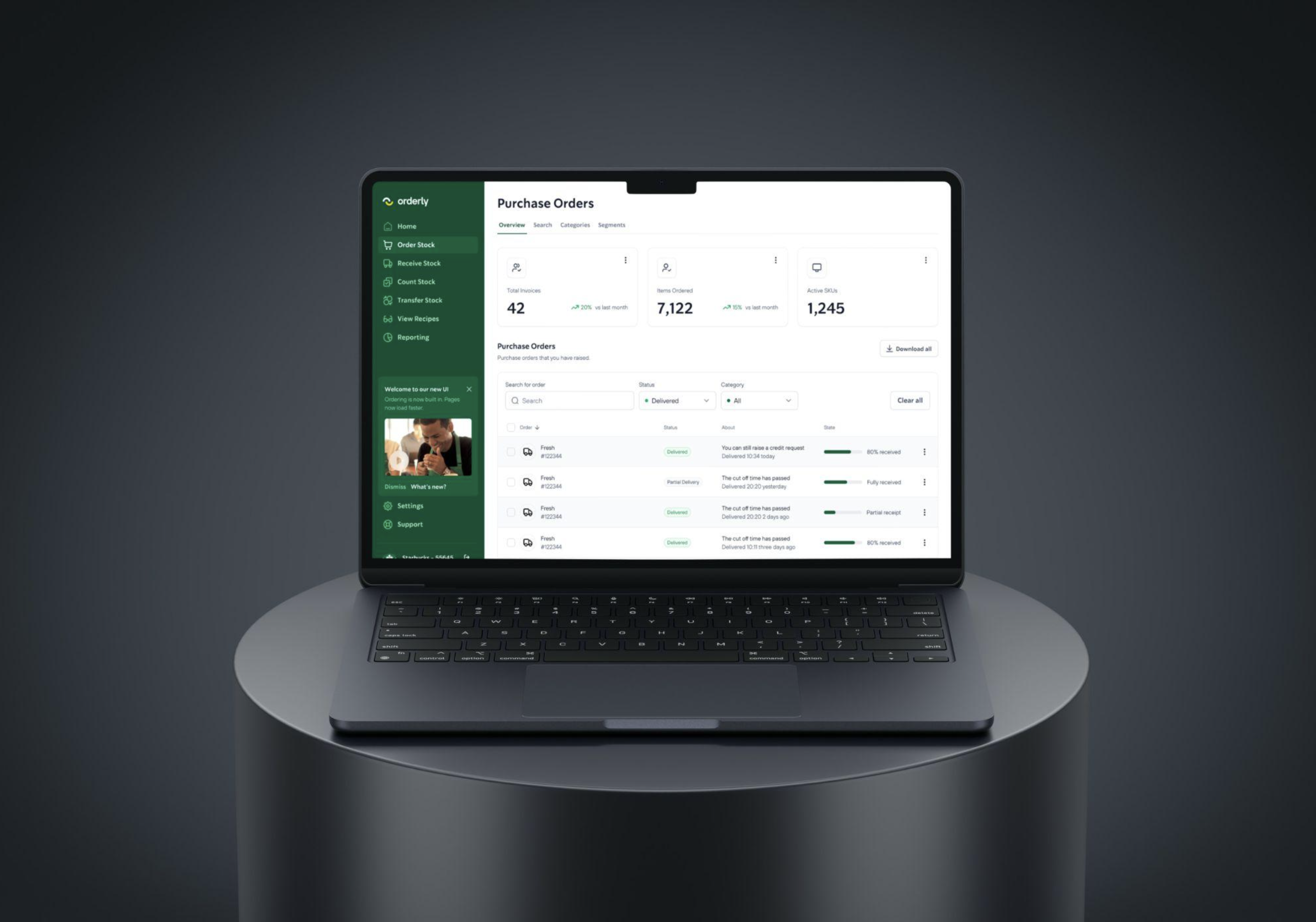
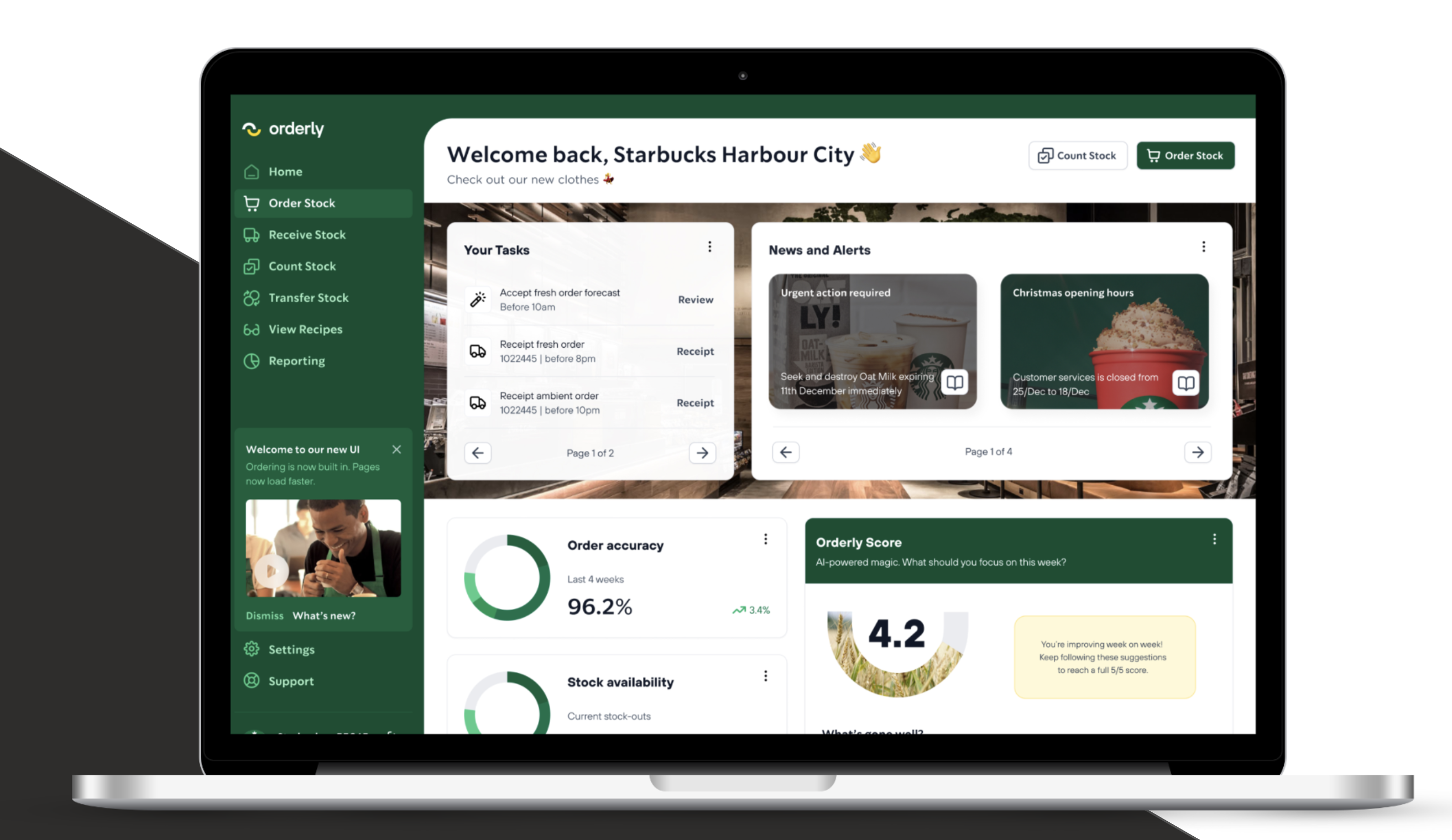
By leveraging advanced inventory management strategies, Starbucks licensees can significantly reduce waste, optimise stock levels, and ensure consistent product availability, leading to increased revenue and reduced costs. This article explores how smarter inventory management directly contributes to financial performance and how modern technology solutions, such as forecasted ordering and real-time reporting, can help stores maintain optimal stock levels with minimal waste.
The Direct Financial Impact of Inventory Management
Inventory mismanagement can erode profitability in multiple ways. The most significant financial risks come from food waste, stock-outs, and inefficient ordering processes.
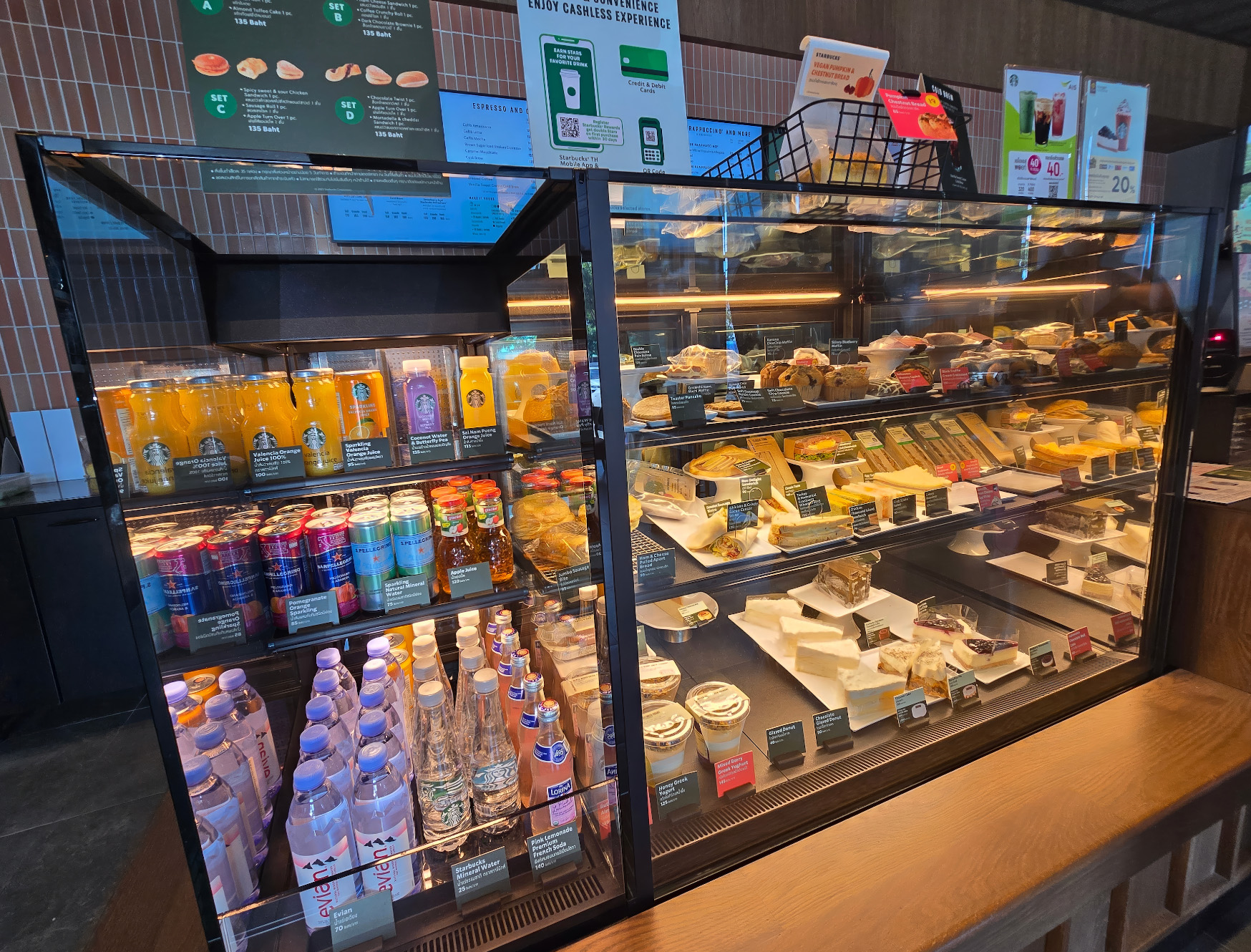
- Food Waste and Shrinkage: Starbucks stores handle perishable goods, including dairy, baked goods, and fresh ingredients. If stock levels are too high, unsold items expire before they can be used, leading to direct financial loss. According to industry research, food waste accounts for up to 6-10% of total food costs in quick-service restaurants. Reducing waste through precise inventory control can dramatically improve margins.
- Stock-Outs and Lost Sales: When a high-demand product is out of stock, customers may either switch to a lower-margin alternative or leave without making a purchase. Frequent stock-outs negatively impact revenue and damage brand perception. Starbucks stores must maintain high product availability without excessive overstocking to avoid unnecessary waste.
- Labour and Operational Costs: Inefficient inventory processes increase labour costs. Manual stock-checking, last-minute supplier orders, and excess administrative work divert staff from customer service and store operations. A well-managed inventory system reduces the need for emergency restocking and last-minute supplier negotiations, saving both time and money.
The Role of Forecasting in Profitability
One of the most effective ways to improve inventory management is through data-driven forecasting. By using historical sales data, seasonality trends, and external factors (such as weather or promotions), Starbucks licensees can predict demand more accurately and adjust stock levels accordingly.
- Predicting Demand Fluctuations: Starbucks stores experience predictable fluctuations in customer demand based on time of day, day of the week, and seasonal trends. For example, iced beverages spike in warmer months, while holiday-themed drinks surge in winter. Smart forecasting models account for these patterns and adjust ordering recommendations accordingly.
- Reducing Overstocking with Predictive Models: Rather than relying on instinct or static par levels, modern inventory systems use AI-driven forecasting to adjust stock levels dynamically. These systems continuously refine predictions based on real-time sales data, preventing excess stock accumulation while ensuring essential items remain available.
- Improving Supplier Ordering Efficiency: Accurate forecasting enables Starbucks licensees to place precise supplier orders, reducing the frequency of emergency purchases, which are often more expensive due to rush fees or smaller order quantities.
How Real-Time Data Enhances Decision-Making
Beyond forecasting, real-time inventory data provides another critical advantage: the ability to respond proactively to emerging trends and stock issues. Traditional inventory management often relies on periodic stock counts, but modern, digital inventory systems provide live updates on stock levels, sales trends, and potential shortages.
Key Benefits of Real-Time Inventory Visibility:
- Instant Alerts on Low Stock Levels – Rather than discovering shortages after customer complaints, store managers receive proactive alerts, allowing them to reorder before stock runs out.
- Automated Waste Tracking – Real-time monitoring identifies high-waste products, enabling managers to adjust ordering patterns and menu recommendations.
- Performance Benchmarks – Licensees can compare inventory performance across multiple stores, identifying best practices and inconsistencies.
By using cloud-based reporting systems, Starbucks licensees can access inventory data across multiple locations, optimising stock levels at both local and regional levels.
The Role of Task-Based Inventory Management
One of the biggest challenges in inventory control is execution. Even the best forecasting and reporting tools are only effective if staff follow stock management protocols consistently. Task-based inventory management systems ensure that employees follow structured workflows for stock counts, waste logging, and ordering.
- Guided Daily Stock Counts: Employees receive step-by-step prompts for stock checks, reducing human error.
- Automated Reordering Suggestions: Instead of manually calculating order quantities, staff receive system-generated recommendations.
- Accountability and Compliance Tracking: Digital records ensure that inventory procedures are followed consistently across all stores.
By removing guesswork from the process, Starbucks licensees can reduce inventory errors, minimise waste, and maintain optimal stock levels with minimal manual oversight.
Case Study: How Smarter Inventory Management Translates into Profit
A Starbucks licensee operating 50 stores across the UK implemented forecasted ordering and real-time reporting to refine their inventory strategy.
The results:
- 30% reduction in food waste after optimising order quantities.
- 15% increase in product availability due to proactive stock monitoring.
- 4 hours saved per store per week by automating stock checks and order management.
These improvements directly contributed to higher profit margins, lower operating costs, and a better customer experience.
Conclusion: The Competitive Advantage of Smarter Inventory Management
For Starbucks licensees, inventory management is not just about keeping shelves stocked—it is a critical business function that directly affects profitability. By implementing smarter inventory solutions, licensees can reduce waste, minimise stock-outs, optimise labour efficiency, and improve financial performance.Modern inventory systems that leverage forecasted ordering, real-time reporting, and task-based management give Starbucks licensees a clear competitive advantage. Those who embrace data-driven inventory strategies will not only reduce costs but also enhance the overall customer experience, ensuring long-term success in an increasingly competitive market.
Take Action
Want to see how smarter inventory management can increase profitability for your Starbucks stores? Book a demo today to learn how Orderly can optimise your inventory and drive better results across your estate.